Book Bans Hit a Record High. INFO Researchers Explain Why.
With nearly 12,000 book bans in public schools last year, scholars trace how individual complaints grew into a national movement, and what it means for librarians
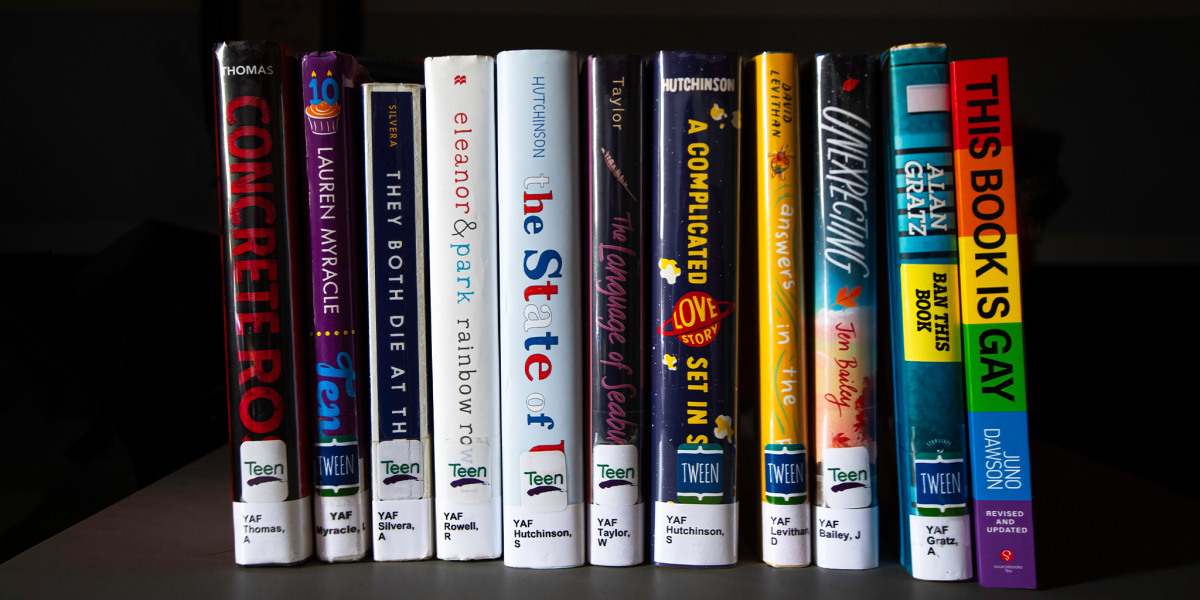
Photo licensed by Adobe Stock via jackienix
And Tango Makes Three tells the true story of two male penguins at New York’s Central Park Zoo who raised a chick together. In 2023, two Florida school districts pulled the picture book from their shelves. One cited the state’s Parental Rights in Education law, which limits classroom instruction on sexual orientation and gender identity.
A book about penguins is an unlikely target, but it shows how far today’s bans reach. PEN America recorded nearly 12,000 book bans in public schools in the 2025–26 school year, the most it has ever documented.
For decades, most requests to remove a library book, known as challenges, came from individual parents objecting to a single title. Now they increasingly come from a coordinated national campaign, one that has produced laws threatening librarians with jail time, set off school board fights and community organizing, and inspired The Librarians, a 2026 Emmy-winning documentary. Two researchers at the University of Maryland College of Information (INFO) study the movement behind the bans.
“This is the largest censorship movement the United States has had for more than a century,” said INFO Professor Paul T. Jaeger, who studies information law and policy.
The country has banned books before, from German authors during World War I to suspected communist sympathizers in the McCarthy era. Jaeger said two things set this moment apart: well-funded national organizations and social media that spreads claims about books almost instantly.
Most challenged books are by or about Black, Indigenous, and LGBTQIA+ people. In his new book, Book Bans, Disinformation, and Cultural Erasure: The Censorship Movement in Libraries, Schools, and Society, Jaeger argues that the bans aim to remove those communities from library collections so other readers never encounter them. “It’s a way of making people disappear,” he said.
Jaeger has pushed the field to respond to the movement as a whole rather than fight one challenge at a time. That means explaining to people who don’t use libraries what libraries do, bringing in the community members who support access, and documenting libraries’ concrete effects on learning and employment. That work earned him the American Library Association’s 2026 Eli M. Oboler Memorial Award.
Allison Jennings-Roche, an INFO PhD student, sees the book banning movement up close. She is associate director of the library for digital initiatives and collections at the University of Baltimore; a policy fellow with the EveryLibrary Institute, part of a national organization that helps libraries campaign for local funding; and editor-in-chief of The Political Librarian.
Her research tracks how one social media post about a book, often exaggerated or false, can trigger challenges across the country within hours. That speed comes from years of planning, she said. National advocacy groups have built trainings, book lists, and talking points, and they have worked to win seats on school and library boards. She calls the result “plug and play censorship kits.”
What’s also new about these censorship campaigns is the target. “This is the first time we have actually seen the criminalization of library work in American history,” Jennings-Roche said. Some states now attach penalties of up to 10 years in jail and $10,000 per banned book found on library shelves. Even when no one is charged, the threat leads library workers to pull books in advance. In small towns, the pressure is personal. “People know who you are,” she said. “They know how to find you.”
To ease some of this pressure, Jennings-Roche argues for stronger job protections for library workers, because “it’s a lot easier to stand up” to those pushing the bans when your job isn’t on the line.
Both researchers say the book challengers are a small group. “It’s not a lot of people,” Jaeger said. When communities are informed, they tend to back their libraries. In this year’s midterm elections, voters approved 41 of the 60 local library funding measures tracked by EveryLibrary. Two measures sought to defund or close a library, and both failed.
Jaeger sees hope in INFO’s newest cohort of Master of Library and Information Science students, the largest in the college’s history. The bans may push some people away from librarianship, he said, but “there are many people who want to enter the profession because of this.”
Neither expects a quick fix. “It’s not a situation where you give up,” Jaeger said.