Alumni Profile: How a Love of Information Led to Capitol Hill
PhD and MLIS alum Kelly Hoffman found her calling in library science—then spent two decades building toward her dream job
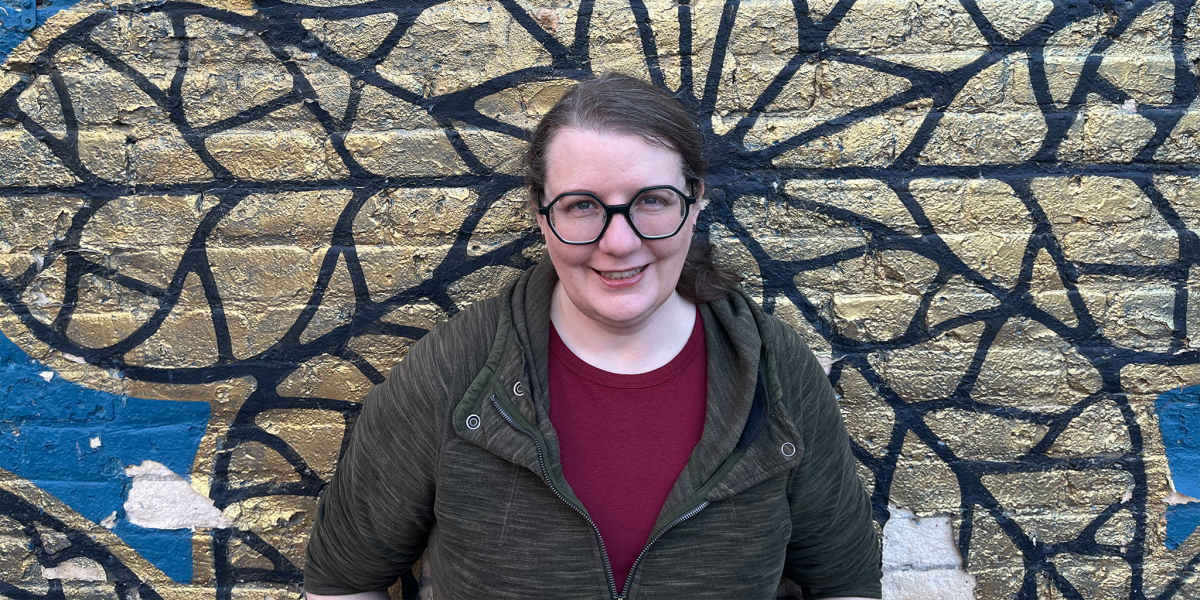
Kelly Hoffman, MLIS '07, Phd '23
Kelly Hoffman will tell you she was a weird kid. She sorted things into categories, devoured books, and was into Lord of the Rings and Doctor Who long before either was culturally fashionable. What she couldn’t have articulated at the time was that her instinct to organize and make sense of the world was pointing her toward a career that would take decades to fully come into focus.
The breakthrough came in college. A roommate was applying to library science programs, and course catalogs—printed ones, she notes, because this was a different era—were lying around the apartment. Hoffman picked one up and stopped cold. “I figured out you could just study information as information,” she says. “That was mind-blowing to me.” The meta approach—not just historical or psychological information, but information as a subject in its own right—was exactly what she’d been searching for. “That was life-changing.”
Finding Her Place at INFO
Hoffman set her sights on the University of Maryland College of Information’s (INFO) library science program, then called the College of Library and Information Science (CLIS), and earned her MLIS in 2007. She arrived just as the college was beginning a forward-thinking shift toward a broader information orientation. Among her professors was Doug Oard, now interim dean, who taught an introduction to technology course she still remembers fondly. “That was a blast,” she says. “He’s a really great teacher.”
After graduating, Hoffman built a career across distinct institutions—a law firm, a USAID contractor—while staying grounded in the same core competencies. About a decade in, she felt the ceiling. She decided to return to INFO for her doctorate. For her dissertation, she focused on personal knowledge management among neurodivergent individuals—how people who think differently develop systems to organize information in their own lives.
She graduated in May 2023 and almost immediately found a job posting that read like it had been written for her: a senior knowledge management librarian position in the Knowledge Services Group at the Congressional Research Service (CRS), part of the Library of Congress. “It was perfect timing,” she says. “Perfect everything.”
A Job Worth the Wait
At CRS, Hoffman serves two sets of clients: congressional staff seeking information, and the research librarians and analysts who need a consultant to help them think through organization, automation, and workflows. The variety, she says, is the point. “I don’t get bored.”
The culture has been its own revelation. In a federal agency whose mission is to serve Congress—not to turn a profit—she found a place where excellence isn’t negotiable. “Everybody’s operating at a really high level,” she says. “There’s no providing something that’s 75% good so we can make more money.” For someone who had always pushed for more, she finally found an environment that pushed back.
What Graduate School Actually Taught Her
Ask Hoffman what skills from her graduate programs she uses most, and the answers aren’t what you’d expect.
Qualitative research methods, yes—that expertise turns out to be essential when evaluating user feedback or conducting usability work. But teaching? That one surprises even her. She was reluctantly pulled into a teaching role during her doctoral program but ended up loving it, and the benefits have outlasted the classroom. Colleagues remark on how unflappable she seems during presentations when technology inevitably fails. Her explanation is simple: anything that can go wrong on a video call, she’s already survived in front of 50 to 100 undergraduates.
She encourages students to seek out teaching experience even if they don’t have academic ambitions. “It takes down a lot of your public speaking fear,” she says. “That’s just gone.”
Her broader career advice is to resist tunnel vision when job hunting. Information skills are hiding in roles that don’t announce their connection to the field—knowledge management, records management, content strategy, web design. She learned this by living it. “Consider your career a trajectory,” she says. “Where you go next isn’t the end of your story. You can keep evolving.”